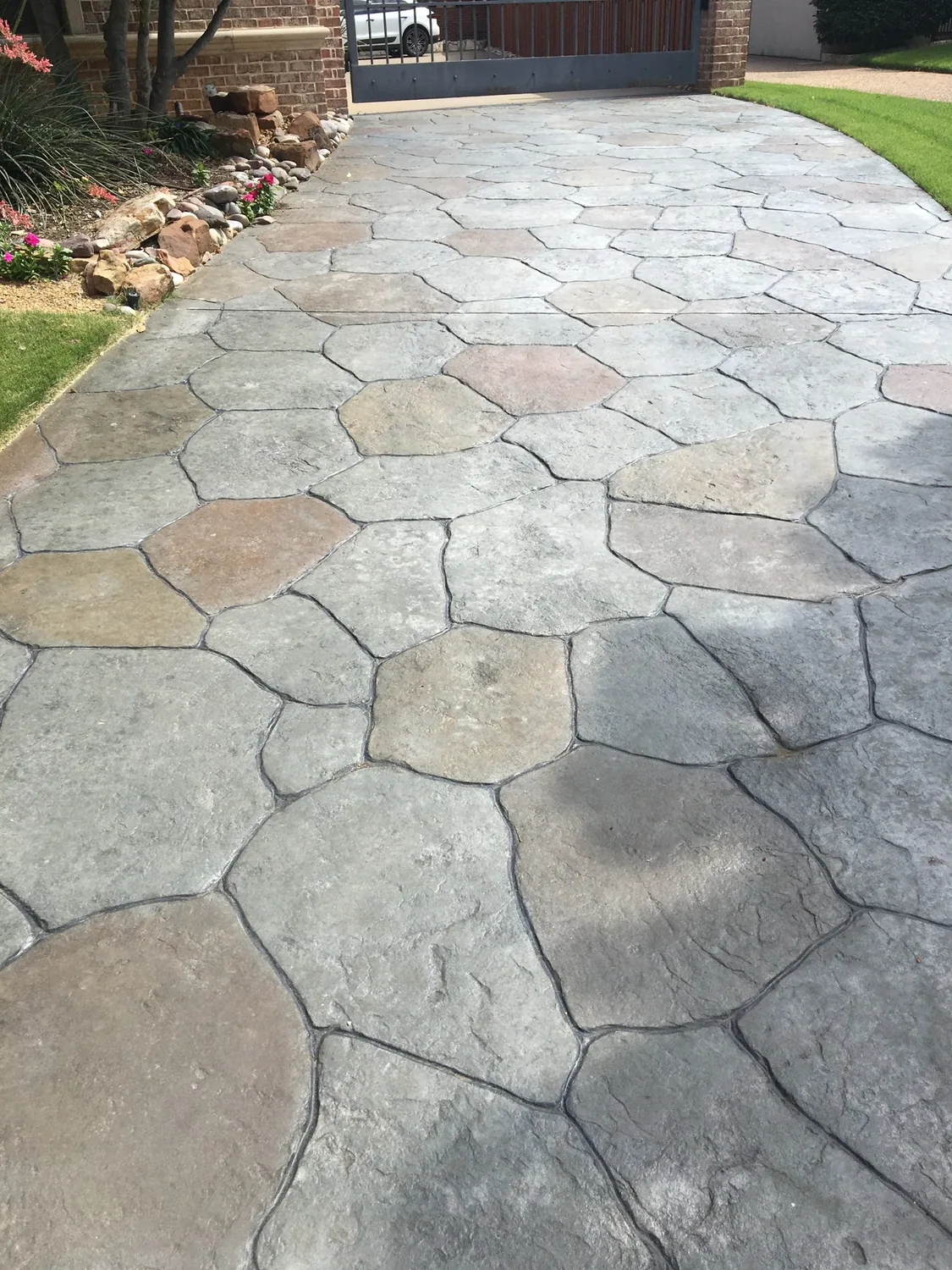
What is stamped concrete?
Stamped concrete is a fresh slab that gets patterned mats pressed into it while the mix is still soft, then colored to pass for stone, brick, or slate. The result reads like pavers but pours as one unbroken surface, with no seams to pull weeds from or work loose.
How much does stamped concrete cost in Arlington?
Decorative work sits above plain flatwork on price, and around here the base still has to be reinforced and built over expansive clay, on top of removing whatever tired surface is already there. As a starting range, stamped concrete tends to run about $14 to $22 per square foot, moving with the pattern detail, the layers of color, and the sealing. We lock the price in only after walking the space.
How does stamped concrete hold up on Arlington clay?
The base is built like any slab here: rebuilt as needed, moisture-conditioned, compacted, reinforced, and jointed for shrink-swell ground. The surface is the part that needs tending, since the Texas sun lifts the color over time, so we reseal on a cycle. Pavers, by contrast, tend to settle and go uneven as the clay shifts under them, a common sight on older Mid-Cities walks.
What patterns and colors can I get?
Stone, slate, brick, and plank textures in earth tones that suit the established homes around Arlington. We bring samples and tune the look to your house and whatever hardscape is already there.
How often does stamped concrete need resealing in Arlington?
Plan on a reseal every couple of years, sooner on the hot south and west exposures that take the most sun. You get a straightforward upkeep schedule from us so the color holds its depth.
Is stamped concrete slippery when it rains?
It can sit smoother than a broom finish, so on walkways and pool decks we blend a non-slip additive into the sealer. We will point out across your layout where that matters most.
How does the cost compare to pavers?
Stamped concrete usually goes in for less than pavers, has no joints to weed, and won't rut and tilt the way pavers can as the clay moves, though it does want periodic resealing for the sun. We will lay the trade-offs out plainly so you can weigh them for your home.